Sunday, August 22, 2021

PDPR ENGLISH YEAR 5 UKM 23/8/2021


Assalamualaikum and good morning everyone! How are you today? I hope you're doing well.

So, are you ready ? Let's get started.... 


ENGLISH YEAR 5 UKM

Date: 23th August 2021 

Day: Monday

Time: 11.00a.m.-1.00p.m.

Skills: Language Arts

Topic : Storytelling


OBJECTIVES: 

At the end of the lesson,  pupils should be able to :

i. read the story with correct stress, pronunciation and intonation.

ii. practice storytelling.

ii. take part in storytelling competition.


Success Criteria

1. Pupils can  speak confidently and take part in storytelling competition.


Activities/instructions

1. Key in your attendance here  👉 http://tiny.cc/daftarpdprskdt

2. In conjunction with our English Week (16-23 August 2021) pupils are encourage to take part in the activities organizing by English Panel. The activities are :

 i) Storytelling Competition
ii) Poetry Recitation
iii) Public Speaking Competition


3. Watch the video and highlight the terms and conditions of the storytelling competition.


The Launching of English Week 2021
SK Durian Tunggal
16th August 2021


4. Read the stories below. Read aloud with correct stress, pronunciation and intonation.


1. The Boy Who Cried Wolf

Once, there was a boy who became bored when he watched over the village sheep grazing on the hillside. To entertain himself, he sang out, “Wolf! Wolf! The wolf is chasing the sheep!”

When the villagers heard the cry, they came running up the hill to drive the wolf away. But, when they arrived, they saw no wolf. The boy was amused when seeing their angry faces.

“Don’t scream wolf, boy,” warned the villagers, “when there is no wolf!” They angrily went back down the hill.

Later, the shepherd boy cried out once again, “Wolf! Wolf! The wolf is chasing the sheep!” To his amusement, he looked on as the villagers came running up the hill to scare the wolf away.

As they saw there was no wolf, they said strictly, “Save your frightened cry for when there really is a wolf! Don’t cry ‘wolf’ when there is no wolf!” But the boy grinned at their words while they walked grumbling down the hill once more.

Later, the boy saw a real wolf sneaking around his flock. Alarmed, he jumped on his feet and cried out as loud as he could, “Wolf! Wolf!” But the villagers thought he was fooling them again, and so they didn’t come to help.

At sunset, the villagers went looking for the boy who hadn’t returned with their sheep. When they went up the hill, they found him weeping.

“There really was a wolf here! The flock is gone! I cried out, ‘Wolf!’ but you didn’t come,” he wailed.

An old man went to comfort the boy. As he put his arm around him, he said, “Nobody believes a liar, even when he is telling the truth!”

The Moral

Lying breaks trust — even if you’re telling the truth, no one believes a liar.


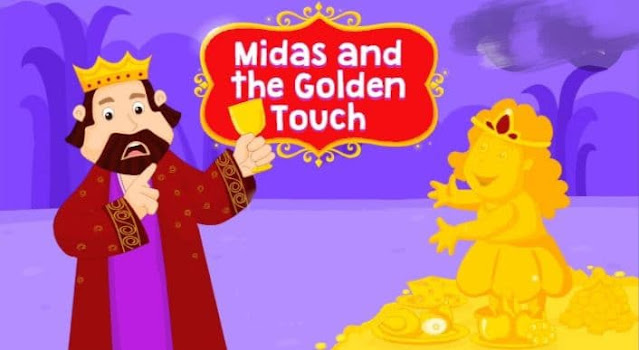
2. The Golden Touch

There once was a king named Midas who did a good deed for a Satyr. And he was then granted a wish by Dionysus.

For his wish, Midas asked that whatever he touched would turn to gold. Despite Dionysus’ efforts to prevent it, Midas pleaded that this was a fantastic wish, and so, it was bestowed.

Excited about his newly-earned powers, Midas started touching all kinds of things, turning each item into pure gold.

But soon, Midas became hungry. As he picked up a piece of food, he found he couldn’t eat it. It had turned to gold in his hand.

Hungry, Midas groaned, “I’ll starve! Perhaps this was not such an excellent wish after all!”

Seeing his dismay, Midas’ beloved daughter threw her arms around him to comfort him, and she, too, turned to gold. “The golden touch is no blessing,” Midas cried.

The Moral

Greed will always lead to downfall.


3. The Proud Rose
Once upon a time, in a desert far away, there was a rose who was so proud of her beautiful looks. Her only complaint was growing next to an ugly cactus.

Every day, the beautiful rose would insult and mock the cactus on his looks, all while the cactus remained quiet. All the other plants nearby tried to make the rose see sense, but she was too swayed by her own looks.

One scorching summer, the desert became dry, and there was no water left for the plants. The rose quickly began to wilt. Her beautiful petals dried up, losing their lush color.

Looking to the cactus, she saw a sparrow dip his beak into the cactus to drink some water. Though ashamed, the rose asked the cactus if she could have some water. The kind cactus readily agreed, helping them both through the tough summer, as friends.

The Moral

Never judge anyone by the way they look.


4. Elephant and Friends

A lone elephant walked through the forest, looking for friends. She soon saw a monkey and proceeded to ask, ‘Can we be friends, monkey?’

The monkey quickly replied, ‘You are big and can’t swing on trees like I do, so I cannot be your friend.’

Defeated, the elephant continued to search when it stumbled across a rabbit. She proceeded to ask him, ‘Can we be friends, rabbit?’

The rabbit looked at the elephant and replied, “You are too big to fit inside my burrow. You cannot be my friend.”

Then, the elephant continued until she met a frog. She asked, “Will you be my friend, frog?”

The frog replied, “You are too big and heavy; you cannot jump like me. I am sorry, but you can’t be my friend.”

The elephant continued to ask the animals she met on her way, but always received the same reply. The following day, the elephant saw all the forest animals run in fear. She stopped a bear to ask what was happening and was told the tiger was attacking all the small animals.

The elephant wanted to save the other animals, so she went to the tiger and said, “Please, sir, leave my friends alone. Do not eat them.”

The tiger didn’t listen. He merely told the elephant to mind her own business.

Seeing no other way, the elephant kicked the tiger and scared him away. Upon hearing of the brave tale, the other animals agreed, “You are just the right size to be our friend.”

The Moral

Friends come in every shape and size.


5. The Bundle of Sticks

Once upon a time, there was an old man who lived in a village with his three sons. Although his three sons were hard workers, they quarreled all the time. The old man tried to unite them but failed.

Months passed by, and the old man became sick. He asked his sons to remain united, but they failed to listen to him. At that moment, the old man decided to teach them a lesson — to forget their differences and come together in unity.

The old man summoned his sons, then proceeded to tell them, “I will provide you with a bundle of sticks. Separate each stick, and then break each into two. The one who finishes first will be rewarded more than the others.”

And so, the sons agreed. The old man provided them with a bundle of ten sticks each, and then asked the sons to break each stick into pieces. The sons broke the sticks within minutes, then proceeded to quarrel among themselves again.

The Moral

There’s strength in unity.


5. Choose one topic.

6. Write in your English 3 (E3) exercise book.

7. Practice your storytelling.

8. Submit your video.


If you've got any questions at all, ask me (pm) and I will try to answer them as soon as I can..

I will see you in the next lesson. Bye for now!


Happy learning😍


#staysafe


PDPR ENGLISH YEAR 5 UTEM 23/8/2021


Assalamualaikum and good morning everyone! How are you today? I hope you're doing well.

So, are you ready ? Let's get started.... 


ENGLISH YEAR 5 UTeM

 Date: 23th August 2021 

Day: Monday

Time: 11.00a.m.-1.00p.m.

Skills: Language Arts

Topic : Storytelling


OBJECTIVES: 

At the end of the lesson,  pupils should be able to :

i. read the story with correct stress, pronunciation and intonation.

ii. practice storytelling.

ii. take part in storytelling competition.


Success Criteria

1. Pupils can  speak confidently and take part in storytelling competition.


Activities/instructions

1. Key in your attendance here  👉 http://tiny.cc/daftarpdprskdt

2. In conjunction with our English Week (16-23 August 2021) pupils are encourage to take part in the activities organizing by English Panel. The activities are :

 i) Storytelling Competition
ii) Poetry Recitation
iii) Public Speaking Competition


3. Watch the video and highlight the terms and conditions of the storytelling competition.


The Launching of English Week 2021
SK Durian Tunggal
16th August 2021


4. Read the stories below. Read aloud with correct stress, pronunciation and intonation.


1. The Boy Who Cried Wolf

Once, there was a boy who became bored when he watched over the village sheep grazing on the hillside. To entertain himself, he sang out, “Wolf! Wolf! The wolf is chasing the sheep!”

When the villagers heard the cry, they came running up the hill to drive the wolf away. But, when they arrived, they saw no wolf. The boy was amused when seeing their angry faces.

“Don’t scream wolf, boy,” warned the villagers, “when there is no wolf!” They angrily went back down the hill.

Later, the shepherd boy cried out once again, “Wolf! Wolf! The wolf is chasing the sheep!” To his amusement, he looked on as the villagers came running up the hill to scare the wolf away.

As they saw there was no wolf, they said strictly, “Save your frightened cry for when there really is a wolf! Don’t cry ‘wolf’ when there is no wolf!” But the boy grinned at their words while they walked grumbling down the hill once more.

Later, the boy saw a real wolf sneaking around his flock. Alarmed, he jumped on his feet and cried out as loud as he could, “Wolf! Wolf!” But the villagers thought he was fooling them again, and so they didn’t come to help.

At sunset, the villagers went looking for the boy who hadn’t returned with their sheep. When they went up the hill, they found him weeping.

“There really was a wolf here! The flock is gone! I cried out, ‘Wolf!’ but you didn’t come,” he wailed.

An old man went to comfort the boy. As he put his arm around him, he said, “Nobody believes a liar, even when he is telling the truth!”

The Moral

Lying breaks trust — even if you’re telling the truth, no one believes a liar.


2. The Golden Touch

There once was a king named Midas who did a good deed for a Satyr. And he was then granted a wish by Dionysus.

For his wish, Midas asked that whatever he touched would turn to gold. Despite Dionysus’ efforts to prevent it, Midas pleaded that this was a fantastic wish, and so, it was bestowed.

Excited about his newly-earned powers, Midas started touching all kinds of things, turning each item into pure gold.

But soon, Midas became hungry. As he picked up a piece of food, he found he couldn’t eat it. It had turned to gold in his hand.

Hungry, Midas groaned, “I’ll starve! Perhaps this was not such an excellent wish after all!”

Seeing his dismay, Midas’ beloved daughter threw her arms around him to comfort him, and she, too, turned to gold. “The golden touch is no blessing,” Midas cried.

The Moral

Greed will always lead to downfall.


3. The Proud Rose
Once upon a time, in a desert far away, there was a rose who was so proud of her beautiful looks. Her only complaint was growing next to an ugly cactus.

Every day, the beautiful rose would insult and mock the cactus on his looks, all while the cactus remained quiet. All the other plants nearby tried to make the rose see sense, but she was too swayed by her own looks.

One scorching summer, the desert became dry, and there was no water left for the plants. The rose quickly began to wilt. Her beautiful petals dried up, losing their lush color.

Looking to the cactus, she saw a sparrow dip his beak into the cactus to drink some water. Though ashamed, the rose asked the cactus if she could have some water. The kind cactus readily agreed, helping them both through the tough summer, as friends.

The Moral

Never judge anyone by the way they look.


4. Elephant and Friends

A lone elephant walked through the forest, looking for friends. She soon saw a monkey and proceeded to ask, ‘Can we be friends, monkey?’

The monkey quickly replied, ‘You are big and can’t swing on trees like I do, so I cannot be your friend.’

Defeated, the elephant continued to search when it stumbled across a rabbit. She proceeded to ask him, ‘Can we be friends, rabbit?’

The rabbit looked at the elephant and replied, “You are too big to fit inside my burrow. You cannot be my friend.”

Then, the elephant continued until she met a frog. She asked, “Will you be my friend, frog?”

The frog replied, “You are too big and heavy; you cannot jump like me. I am sorry, but you can’t be my friend.”

The elephant continued to ask the animals she met on her way, but always received the same reply. The following day, the elephant saw all the forest animals run in fear. She stopped a bear to ask what was happening and was told the tiger was attacking all the small animals.

The elephant wanted to save the other animals, so she went to the tiger and said, “Please, sir, leave my friends alone. Do not eat them.”

The tiger didn’t listen. He merely told the elephant to mind her own business.

Seeing no other way, the elephant kicked the tiger and scared him away. Upon hearing of the brave tale, the other animals agreed, “You are just the right size to be our friend.”

The Moral

Friends come in every shape and size.


5. The Bundle of Sticks

Once upon a time, there was an old man who lived in a village with his three sons. Although his three sons were hard workers, they quarreled all the time. The old man tried to unite them but failed.

Months passed by, and the old man became sick. He asked his sons to remain united, but they failed to listen to him. At that moment, the old man decided to teach them a lesson — to forget their differences and come together in unity.

The old man summoned his sons, then proceeded to tell them, “I will provide you with a bundle of sticks. Separate each stick, and then break each into two. The one who finishes first will be rewarded more than the others.”

And so, the sons agreed. The old man provided them with a bundle of ten sticks each, and then asked the sons to break each stick into pieces. The sons broke the sticks within minutes, then proceeded to quarrel among themselves again.

The Moral

There’s strength in unity.


5. Choose one topic.

6. Write in your English 3 (E3) exercise book.

7. Practice your storytelling.

8. Submit your video.


If you've got any questions at all, ask me (pm) and I will try to answer them as soon as I can..

I will see you in the next lesson. Bye for now!


Happy learning😍


#staysafe


Wednesday, August 18, 2021

PDPR ENGLISH YEAR 6 UKM 19/8/2021


Assalamualaikum and good morning everyone! How are you today? I hope you're doing well.

So, are you ready ? Let's get started.... 


ENGLISH YEAR 6 UKM

 Date: 19th August 2021 

Day: Thursday

Time: 8.00a.m.-10.00a.m.

Skills: Reading and Speaking

Topic : Public Speaking


OBJECTIVES: 

At the end of the lesson,  pupils should be able to :

i. read the scripts of public speaking.

ii. practice the public speaking.

ii. take part in public speaking competition.


Success Criteria

1. Pupils can  speak confidently and take part in public speaking competition.


Activities/instructions

1. Key in your attendance here  👉 http://tiny.cc/daftarpdprskdt

2. Read the public speaking scripts below. Read aloud with correct stress, pronunciation and intonation.

3. Choose one topic.

4. Practice your public speaking.

5. Here's the link for our google meet later. Hope to see you soon (9.00am).
To join the Google Meet, click this link.


Topic 1 : The advantages and disadvantages of bringing handphone to school.

Assalamualaikum and a very good morning to the honourable judges, teachers, parents and my fellow friends.  Today, on this fine day, I would like to present a public speech about ‘the advantages and disadvantages of bringing handphone to school. It is an issue where it could be implemented soon. Before it takes place, let's look the pros and cons of this matter.

 Ladies and gentlemen,

Handphones, mobile phones, and tablets are becoming  common in almost everywhere in our society, even now, small children have it too. Today,  It has become a must have item to everyone. Even now, If I ask the audience, whether they have a handphone,  probably almost all will say yes, isn't? Well, as for now this question exclude the students, because students are still prohibited to bring handphone to school,  but if students are allow to bring handphone, most probably, all the audience in this hall, will say yes.

But then,  is it a good idea to allow  students to bring handphone to school ? In every story, there are two sides of contracting ideas, therefore, I would like to take this opportunity, to let the audiences know the advantages and disadvantages of allowing students to bring handphone to school.

 Ladies and Gentlemen,

Let me start my speech by stating the  first advantages of student bring phone to school that is, to make communication easier, especially between parents and their children.  It  will allow them to communicate with each other at any time. In the past, parents often never knew where their children were until they came home. With handphone, parents can check up on their kids and arrange transportation or relay important information if necessary at any time they want. Like for example, the children can tell their parents what are their activities and thus make  the parents less worry about their children whereabouts.

Secondly  handphones can be an invaluable tool in emergency situations. For instance, if a student is severely injured or there is a crisis situation,  the phones can allow students to contact authorities or anyone for help.

Thirdly, with the technology available, it can help the students to learn more. More easy access to internet, students can search information on the internet easily. But it could also be the other way around. Students use the internet to find fun instead of  studying.

Now, I will focus on the disadvantages of student bring phone to school. Firstly  is about  theft issue. With more and more attractive phones available, there are good chances of phone being snatch or theft. This happen because some pupils might not be able to afford it, thus, the only way for them to have it,  is by steal it.  Students also can make extra money too by stealing the handphone and sell it.

Moreover, students can at times be clumsy when keeping their things. We all know that once the item is gone, it will be gone forever. The price of handphone is not cheap, and when the theft issue arise, it can cause a lot of other trouble.

Secondly, the phone can may cause distraction in lessons. Some students that did not shut off their  phone and suddenly  get a phone call, will disturb the lesson in the class. They can also play games in hiding during the lesson. With so many students in the class, teacher could overlooked these students. This is one of the instances of students misuse the purpose of handphone.

 By bringing handphone to school also will hinder pupils to study more as they are much more prefer to play games than to read book. They only used the privilege given for their own joy only. Thus, the passion for learning for many students will be decreasing and this is bad because study is important in life. Only With more knowledge we could be more developed, but if these young generation do not like to study, it will hinder our progress to be more successful.

Ladies and Gentleman,

I have line out the pros and cons of allowing students to bring handphone to school. Now, it is up to us to decide and choose what is the best decision on this issue. Well then, I arrived at the end of my speech, and thus I would like to thank all for lending your ears. Therefore, I end my speech with thank you very much and good bye. Thank you.


Topic 2 : TRUE BEAUTY

 Assalamualaikum and a very good morning to the honourable judges, teachers, parents and my fellow friends.  Today, on this fine day, I would like to present a public speech entitled ‘ True Beauty'

What is the definition of “beauty?” What defines beauty? What is it to be beautiful?

             Beauty is confidence. Many people in the celebrity world view beauty as one’s physical appearance. They are not wrong: there is physical beauty, but people fail to realize inner beauty. Confidence has been shown in many makeover shows such as Ten Years Younger or Make Me a Supermodel to make people’s physical and inner beauty increase dramatically. Confidence allows self-esteem to heighten, and grants the person more positive thinking in their view of life. Confidence in oneself is needed to reveal the true beauty in every person. 

Ladies and gentlemen,

            The perception of beauty is immensely broad, making it an exceptionally complex topic, as there are many ideas about beauty. An example of such, there is a certain ethnic group in Africa who believe having rings to elongate their neck is beautiful. Also, bound feet in China are a well-known perspective of beauty. These are merely several ancient traditions of physical attractiveness; seeing inner beauty is another way to view beauty. People are beginning to believe that confidence and beauty are interlinked. In search of evidence to support this argument, “When you have confidence in yourself you tend to dress with the clothes that fit you the best..... That looks good on them. They take care of themselves... On top of that, I smile a lot more because I'm happy with myself. Smiles are always attractive. When they can see that amount of self respect it makes everyone around you feel good and when that happens beauty radiates from everyone.” (answers.yahoo.com: How are beauty and confidence interlinked?) This is one case on how beauty and confidence are connected. However, dressing as yourself, and being happy and proud of who you are, is another sign of confidence that increases external and internal beauty. Other people, especially friends nearby, will notice others’ happiness and confidence, which will make them more attractive. Subjective and objective beauty is vital, and when one feels positive and is grateful for their attractive qualities, they will be more confident, and their true beauty will be shown.

Ladies and Gentleman,

            Beauty is confidence. Some people fail to realize this; however, the moral that confidence and beauty are connected is beginning to spread. Confidence will increase self-esteem, happiness, and pride in oneself, and the true beauty of the person will soon be revealed.

 I arrived at the end of my speech, and thus I would like to thank all for lending your ears. Therefore, I end my speech with thank you very much and good bye. Thank you.


Topic 3 : TIME MANAGEMENT

Assalamualaikum and a very good morning to the honourable judges, teachers, parents and my fellow friends.  Today, on this fine day, I would like to present a public speech entitled ‘ Time Management'

I'm late, I'm late, for a very important date. No time to say "hello", "goodbye", I'm late, I'm late, I'm late!

Ladies and Gentleman,

Have you ever felt like the White Rabbit in Alice in Wonderland? Rushing from one thing to the next with no time to rest or relax? If so, perhaps what you need is some time management.

The problem is, you can't really manage "time". You can't take a few hours from the morning and put them in the evening, or take a few extra hours from the middle of the day and put them into the night. There are the same number of hours in the day for everyone, and the follow exactly the same pattern every day.

Each day you have 24 hours to utilize. This breaks down into 1440 minutes or 86,400 seconds. Each person gets the same amount. You can't save them like vacation days. When they are over, the time is gone. Whether you spent your time wisely or foolishly, it doesn't matter, you can't get it back.

So, if you can't manage "time", what can you manage? You can manage yourself and how you spend your day by setting priorities for what you want to accomplish and then scheduling the activities into a day planner, a calendar, or just a "to do" list.

Have you ever seen someone who seems to be able to accomplish 25 different things while you have difficulty completing 4 or 5? That person has learned the secret of priority management - how to make good use of their time. They may spend their Sundays preparing meals for the week so that they can have time for other activities during the week. They may give up television in order to take courses.

They may make their children's activities a priority, but take knitting or reading with them for the "down" times at the rink, i.e. practices, dressing and undressing time. They may keep magazines or books with them to catch up on reading while waiting in the doctor's offices or for other appointments. They may listen to tapes in their car while driving, either to learn something new, or to keep their mind on something while they drive so they won't speed.

Once you have set some priorities, it will be easier to decide how to spend your time. For example, if your priority is getting your bike on the road, spending 1 1/2 hours on a Sunday afternoon working on the bike is a good use of your time. However, if your priority is keeping your spouse happy and she is waiting for you to help her in the garden, spending 1 1/2 hours on your bike is not a good use of your time!

Ladies and Gentleman,

The first thing you need to do is decide what is important to you and then schedule it into your day. If you use a calendar, you may want to colour code it with red for very important. You can schedule other events - work, leisure - in different colours so that it is easy to see what you want to do at any point in time. You can take some time at the beginning of each week to plan your activities for the week.

Often you will have to plan your activities around other family members. It may help to colour code each of your family members as well. Then you can decide if spending time attending their activities is a priority for you or not.

One of the best questions to ask yourself on a regular basis is, "Is this the best use of my time at this moment?". If the answer is yes, keep on doing it. If the answer is no, then it's time for a change.

This doesn't mean that there is no time for unscheduled activities such as friends dropping over - it may mean a slight change in priorities for the day, or giving up some other free time during the week to accomplish your tasks, or simply moving them back a few days if necessary. The important thing is to set your priorities so that you will allow time for them. That way you will use your time more efficiently and you won't have to be like the White Rabbit running around saying, "No time, No time"

I arrived at the end of my speech, and thus I would like to thank all for lending your ears. Therefore, I end my speech with thank you very much and good bye. Thank you.


Topic 4 : The Advantages of Reading

Assalamualaikum and a very good morning to the honourable judges, teachers, parents and my fellow friends.  Today, on this fine day, I would like to present a public speech entitled ‘The Advantages of Reading '

We always think only one question, what is the advantage of reading? There are many reasons people should read. People should read because it helps them to improve in English. It helps them to be a better reader and it helps people get better jobs. For these reasons people should read books.

Ladies and Gentleman,
First of all, reading helps people to learn English and improve in English. For example, there are many words we don’t know so when we read a book, we learn these words. If we don’t know the meaning of the word we are going to write it and then look it up in the dictionary, which helps us to learn new word and meaning of the word.

In addition, Reading helps people to get a better reader. For instance, in school you have to read better otherwise you can’t pass ESL or regents. Also reading is one way that helps you to write a better essay. For example, when you read a book, it helps you to get new ideas and when you get new ideas you can use all these ideas and write a better essay.

Reading helps you get a good job. For instance, if want to get a good job you have to read better because if you get good job there are many things you have to read aloud in front of other people so if you can’t read they are not going to hire you because you don’t know how to read. If they hire you they have to lose lots of money because nobody come to their company all people that they hire they don’t how to read, they don’t understand people what they explain them.

Ladies and Gentleman,
In conclusion, I think reading is very important. We have to read otherwise we can’t succeed in the future. Reading is very important. If we don’t read books we can’t learn better English, if we don’t learn English we can’t get better job. Many people think that reading is not so important. I think they should think more.

 Ladies and Gentleman,

I have line out the advantages of reading. Well then, I arrived at the end of my speech, and thus I would like to thank all for lending your ears. Therefore, I end my speech with thank you very much and good bye. Thank you.


6. Watch this video to know the terms and conditions of public speaking competition, storytelling competition and poetry recitation👇

https://www.youtube.com/watch?v=Q95lJkgRkD0


Public Speaking👇

If you've got any questions at all, ask me (pm) and I will try to answer them as soon as I can..

I will see you in the next lesson. Bye for now!


Happy learning😍


#staysafe


PDPR ENGLISH YEAR 5 UKM 30/9/2021

  Assalamualaikum and good morning everyone !  How are you today? I hope you're doing well. So, are you ready ? Let's get started......

ATTENDANCE FORM